ONLINE ENTRY FORM CONTESTANTS MEDIA HISTORY THE CENTER SPONSORS LINKS CONTACT HOME
Great American Think-Off


20th Annual Great American Think-Off Question: "The Nature of Humankind: Inherently Good or Inherently Evil?"

“The Nature of Humankind: Inherently Good or Inherently Evil?” is this year's Great American Think-Off question, reprising the first annual Think-Off when the same question was asked and, for the only time in Think-Off history, resulted in a draw. Think-Off organizers decided to revisit the nature of humankind issue again this year, seeking a clearer answer. We are asking everyman and everywoman to offer their thoughtful replies to this essential problem.

The Great American Think-Off is an annual people's philosophy contest that is open at no cost to anyone who wishes to engage with fellow Americans to address an enduring question about our core beliefs. The debate was established to provide a national forum for citizens to discuss these essential questions.

Entering the competition is easy. Just submit your 750 word essay by April 1, 2012 (postmark date). You may send it in one of three ways: through the mail to Great American Think-Off, New York Mills Regional Cultural Center, P.O. Box 246, New York Mills, MN 56567; by email to nymills@kulcher.org (no attachments); or through our online form at www.think-off.org. The four finalists will be notified on May 1, 2012 and invited to participate in the great debate to be held before a live audience in New York Mills on Saturday, June 9th. The four final essayists will each receive a $500 cash prize and travel expenses to the debate, and the winner will be chosen by the audience on June 9th.

The first four contestants to debate this same question 20 years ago included Katie McCannon, a 15 year old sophomore from Wichita, Kansas who, along with Jennifer Stites, a former tribal police officer from Eagle Butte, South Dakota, argued that the nature of humankind was essentially evil. The two contestants countering with the assertion that humankind was good were Charles Eldredge, a research engineer from Fessenden, North Dakota and Jeff Ethen, a Catholic priest from Clitherall, Minnesota.


Bemidji, Minnesota dentist Marsh Muirhead wins 2011 Great American Think-Off  2011Winners

On Saturday, June 11th, Marsh Muirhead (second from left in photo), Bemidji, Minnesota dentist and poet, won the debate of this year's Great American Think-Off question, "Does Poetry Matter?"  Marsh's argument that poetry matters to many was advanced by his strong example of the popularity and quality of the poetry of former American poet laureate, Billy Collins.  Marsh was instrumental in bringing Billy Collins to read his work in Bemidji.  Marsh was awarded the gold medal and the title of "America's Greatest Thinker" for 2011. The New York Mills Arts Retreat and Regional Cultural Center is the annual sponsor of this unique event that encourages everyone to bring philosophy out of the university and into the daily lives of all Americans. 

Mahmood Tabaddor (third from left) of Rochester, Michigan, was the second-place medal winner--Mahmood's engaging argument was that poetry had in previous times been of great importance.  But today, in America in particular, it no longer matters to the large majority of Americans who prefer prime-time reality show on television and fantasy novels to pass the time. 

Bob Levine (on left in photograph) of New York City also argued that, lamentably, poetry no longer matters to most of us in America.  His argument noted, in disappointment, that our care and use of language has declined to such a point that poetry, by his definition the result of the careful use of language, has become irrelevant.  Doug Wilhide (at right in photograph) of Minneapolis, is a poet like Marsh Muirhead and editor of the Southwest Journal, a magazine of contemporary poetry.

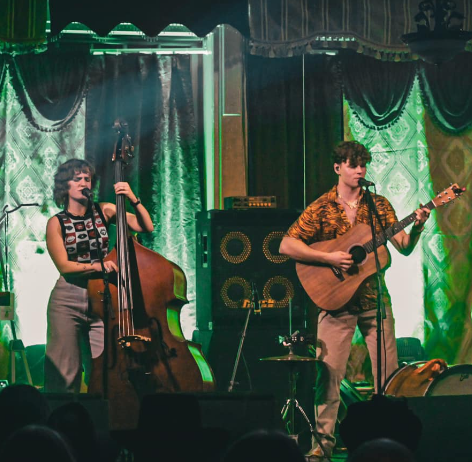
EdBokLeeMinneapolis-based poet Ed Bok Lee read and performed his poetry as part of the evening's festivities.  He is a former poet-in-residence at the New York Mills Arts Retreat and Regional Cultural Center. 

This is the 19th annual Great American Think-Off.  The 20th annual Think-Off season will open on January 1, 2012 when the question for next year is released.  Anyone may submit an essay in this contest and become eligible to win one of the four prizes of $500 and the chance to vie for the title of America's Greatest Thinker. On January 1, 2012 the question for next year, may be found here on this site.

Below is a brief interview with Marsh Muirhead made by Lakes Radio, the public television station based in Bemidji, Minnesota.


The complete text of each of the four finalists' essays follows below. You can listen to the debate just as it was argued courtesy of Lakes Radio 99.5.


MarshMuirheadMarsh Muirhead is a poet and writer, dentist and flight instructor, living on the banks of the Mississippi River near Bemidji, Minnesota with his retriever, Scout. His poems and stories have been published in The Southeast Review, New Mexico Poetry Review, Minnetonka Review, Rattle, Modern Haiku and elsewhere. He is a contributor to the Canadian poetry website How Pedestrian and is the author of Key West Explained – a guide for the traveler.

Yes, Poetry Matters
Yes, poetry matters. It matters because, at both the personal and universal level, it is the spiritual language of our one human family; it speaks to and from us. It is our song and lament, our prayers and outrage. Poetry takes over when the prose of daily intercourse fails, when facts alone do not bear the whole truth. With meter, accent, sound, line, repetition, and the other tools of the poet’s repertoire, poetry connects with us—physically and emotionally—in regarding the loves, disappointments, passions, and unanswered questions in our lives.

Although ours was a blue-collar family, my heroes have always been poets. When I was six years old we lived on Sinclair Lewis’s Main Street in Sauk Center. I remember, from that time, the soothing sound of my mother’s voice, when, on the occasion of family tragedies she would recite the Psalm: “He maketh me to lie down in green pastures; he leadeth me beside the still waters.” She also read to my sisters and me from The Best Loved Poems of the American People. My favorite was Vachel Lindsay’s The Congo: “THEN I SAW THE CONGO, CREEPING THROUGH THE BLACK,/CUTTING THROUGH THE FOREST WITH A GOLDEN TRACK./ Then along that riverbank/A thousand miles/Tattooed cannibals danced in files.” After each reading of the poem I would say, “Again!”

I was a darkly romantic, perhaps odd little kid, hooked on poetry. Another early favorite was Edgar Allen Poe. What first-grader could fail to be captured by the beautiful Annabel Lee? “I was a child and she was a child,/In this kingdom by the sea:/But we loved with a love that was more than love—/I and my Annabel Lee.” When I was in the eighth grade, my heart broken badly for the first time and unable to speak for myself, I copied out the words to a Beatles song and sent them to my departing angel: “As I write this letter/send my love to you/remember that I’ll always/be in love with you.”

But enough about me. Has it mattered that for over four hundred years Shakespeare has entertained and explained us to ourselves in thousands of lines of iambic pentameter verse? No other poet has so dissected and revealed the human condition while at the same time pointing out how this is done. “The lunatic, the lover, and the poet,/Are of imagination all compact…/The poet’s eye, in a fine frenzy rolling,/Doth glance from heaven to earth, from earth to heaven;/And, as imagination bodies forth/The forms of things unknown, the poet’s pen/Turns them to shapes, and gives to airy nothing/A local habitation and a name.”

It is Shakespeare who reminds us, in poetry, that all the world’s a stage; that the fault lies not in our stars, but in ourselves; that cowards die many times before their deaths; that we should neither borrower nor lender be—if only we could follow that advice! To be or not to be? Well, life is, after all, but a walking shadow, and soon our revels are ended, and our little life is rounded with a sleep.

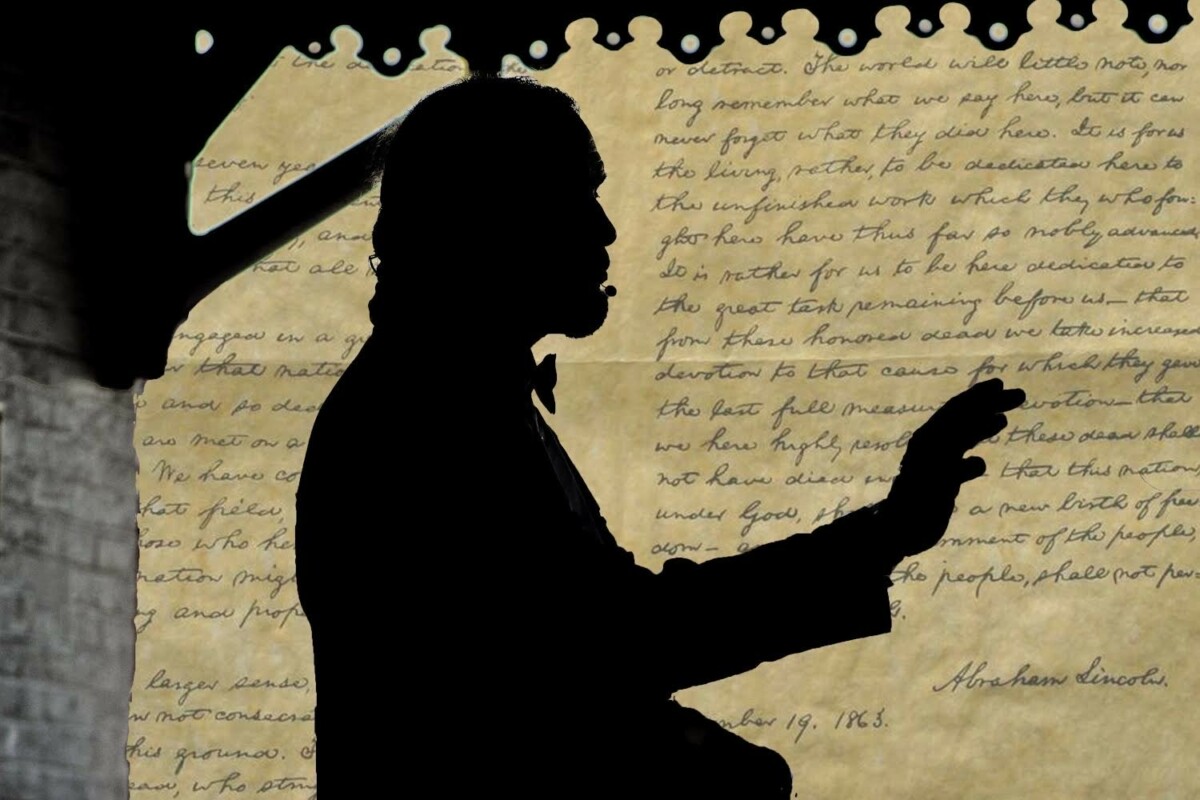
Did Lincoln’s words, more poetry than prose, matter in our nation’s history when, in 1863, he began with “Fourscore and seven years ago…” and concluded, just nine sentences later with “…that this nation, under God, shall have a new birth of freedom; and that government of the people, by the people, for the people, shall not perish from the earth.”?

One hundred years after Lincoln, Martin Luther King began his speech with “Five score years ago,” invoking Lincoln, then moving on to eight stanzas beginning with “I have a dream…I have a dream…I have a dream today,” followed by ten iterations of the line “Let freedom ring…Let freedom ring.” Has poetry ever mattered more?

Poetry brings us comfort and company; is the antidote to the crass commercialism and absurdity of daily life. Poets make us laugh, allow us to dance on the edge of the abyss, to celebrate the lightness and darkness of our lives, remind us that the deepest thoughts and feelings that we share are best expressed in poetry, not in straight prose, as Emily Dickinson suggests here:

Tell all the Truth but tell it slant—
Success in Circuit lies
Too bright for our infirm Delight
The Truth’s superb surprise

My heroes have always been poets—channels through which truth’s superb surprise is delivered—rocking and rolling, in mystery and in celebration, essential.

MamhoodTabaddorMahmood Tabaddor obtained his graduate degrees in engineering from University of Michigan and Virginia Tech. Since graduation, he has worked in telecommunications, automotive and now product safety. He lives with his wife and two kids in Rochester, Michigan. His wife is on Facebook, his kids use an iPad, but he still likes to read books the old fashioned way.

No, Poetry Doesn’t Matter
I can only recall a few incidents from my days in elementary school, but there is one memory that is still very vivid. On the first day of school, for our literature class, where somehow it seemed that the unhappiest people in the world were assigned to teach this subject, we were instructed immediately to open our textbooks. There, on the first page, was a full length poem. Our assignment, homework already on the first day, was to be ready to recite this poem from memory in front the class on the next day. This struck fear in all of us and a not so slight disliking of poetry.

As the years went by, poetry played a smaller role in my education. Maybe an occasional poem would pop up in class but no more mandates to vocalize a poem to an audience. None of my friends read or discussed poetry (unless lyrics from Metallica count). Then in my senior year, I took a course on Shakespearean literature. A great teacher, who really helped us understand, enjoy and delve into the challenges and complexities of language usage and meanings in Shakespearean plays. And then nothing. At least for a few years until I went to a speech by Maya Angelo during my college years. Her reading of her own poetry was so lyrical and the message so courageous that I was brought back into poetry. Suddenly I was eagerly reading poetry by Maya Angelou, Nikki Giovanni, Maria Rilke, Rumi, and others on my own. But in isolation. I still have poetry books which sit quietly unused on my bookshelves, sometimes extracting a glance of regret, as I pull out a neighboring prose book.

Now, as a parent, I am reading poem-like books, stories based on rhymes for my kids. We are all familiar with the rhymes of kid’s books such as Sam I am, and Cat in the Hat. The kids certainly enjoy them but something seems to happen as kids get older. They lose interest in poetry or maybe the way it is taught. Now basically the experience of poetry is rare in our lives. Hardly any of us arrive at poetry the way described by Pablo Neruda.

And it was at that age ... Poetry arrived
in search of me. I don’t know, I don’t know where
it came from, from winter or a river.
I don’t know how or when,
no, they were not voices, they were not
words, nor silence,
but from a street I was summoned,
from the branches of night,
abruptly from others,
among violent fires
or returning alone,
there I was without a face
and it touched me.

Today we are surrounded and immersed into a world of pure information provided quickly through visually gripping images on electronic screens. The only arena where poetry might still touch us is music but I am not sure that lyrics of culturally popular songs, which often adhere to a very loose interpretation of rhyming, qualify as poetry. I cite an example from a recent Britney Spears song heard daily and recited by many young people:

Cause you feel like paradise
And I need a vacation tonight
So if I said I want your body now
Would you hold it against me

(Yeah) (Uh huh) (Oh)

Gimme something good
Don’t wanna wait I want It now (na-na-now)
Pop It like a hood
And show me how you work It out

Of course, we are a creative species and so even with some of the new technologies, we try to keep alive some old traditions. I saw an International Poetry web site promoting the use of SMS texting as a medium for poetry. I am not sure that a 160 character limit including spaces is helping keep poetry alive the way Khalil Gibran sees poetry as a great deal of joy and pain and wonder, with a dash of the dictionary.

There is very little poetry is our lives now though we might still be able to name Walt Whitman or Robert Frost as an answer to a trivia game question. And if there is a very little of something in our lives, as humans, we learn to adapt and live without it. Even if our lives would be richer with it. We humans do not always make good decisions. So like the road not taken, we have chosen a path without poetry and so poetry matters not in our lives anymore.

BobLevineBob Levine just turned 20 years old (celsius). He lives in both New York City and Roxbury, Connecticut, in the foothills of the beautiful Berkshire Mountains. When he is not creating companies, the latest being nCourt.com, an online government e-commerce company that allows you to make court filings and pay traffic citations over the internet, he most enjoys being with family and friends, accompanied by good conversation, good wine and lots of laughter.

No, Poetry Doesn’t Matter
Stated in such an austere and simple form, bereft of any coloration, explication or nuance, the answer to the question “Does Poetry Matter?” can only be, no it does not.

Examining its derivation in the Greek poiesis, meaning something that is made or brought forth, gives us little in the way of support for imbuing it with any value. Certainly, we have all been exposed to poetry in one form or another. Indeed, any of us with a certain minimal number of firing neural synapses could engage in this making and bringing forth and, more than likely, will be rewarded for our effort with a triviality that largely wastes the resources expended in transcribing it. In such an instance, one can argue that the commodity of time squandered by the creator in engaging in the effort as well as the reader or listener in receiving the result, mattered considerably more than the product itself.

Before I’m accused of being a mean-spirited, anti-culture, barbarian, I must confess that I too number among those romantics who, upon first being smitten with puppy love, put pen to paper. The result being a scribbled tome of such gibberish that upon review many years later causes me to grimace with embarrassment. Not that we fledgling Keats and Shelleys have engaged in bad conduct or wrong or sinful behavior. We’ve merely dabbled in activities of the same significance as a day dream. A pleasant little reverie that ultimately signifies nothing.

Unless you are among the growing cadre of over-shrunk, sensitive souls who prefer reading romance novels to doing something useful and tend to elevate feelings and their expression to the level of a religious rite, then you would regard the activity as a mere trifle, that matters as much as a tasty piece of chewing gum.

Some will say, “But you are not a craftsman and therefore why should you expect that your creation will have value?” My response is, does a block of Carrara marble matter? Certainly it does not, although at the hands of a Michelangelo it could be formed into the statue of David.

By succumbing to the tempting argument that poetry can be used as a vehicle to elicit soaring inspiration if employed in ecclesiastical texts, or produce great drama at the hands of Homer, or reveal awesome imagination by the anonymous author of Gilgamesh, merely begs the question. It is only a medium, like whistling, that delivers something to which we can respond. Hey, c’mon, who wasn’t moved by John Wayne whistling the theme song from the ancient movie, The High and the Mighty?

Does playing the saxophone matter? Trust me when I tell you that if you listened to me playing one, all that would matter is where you left your hat and coat to beat a hasty retreat. What does matter, however, is the sound made by Charlie Parker, Stan Getz, Gerry Mulligan or Paul Desmond.

Poetry matters as much as a stick lying on the side of a road. It is an insignificant object, of virtually no value, which, even when seen, registers no cognitive response by a passerby. Yet, when lifted from the ground and broken against the forehead of a king it can forever change the course of human history. Nonetheless, does a stick really matter? Neither does poetry.

DougWilhideDoug Wilhide is a writer who lives in Minneapolis. He holds degrees in English from Miami University (Ohio) and the University of Iowa. He worked as a copywriter and creative director for several ad agencies and taught graduate students at the University of St. Thomas. A few years ago he set up Trolley Car Press, which has published two books of local poetry. He is the Poet Laureate of Linden Hills and the poetry editor for the Southwest Journal.

Yes, Poetry Matters
The summer I worked construction I spent a week helping a bricklayer. It was hot, sweaty, physically demanding work and, though we were from different backgrounds, we became friends. He had finished high school twenty years before. I was entering my junior year in college. One day he asked me what my major was. I said, “English.” He said, “Oh -- poetry and all that stuff, huh?” “Yes,” I said.

He laid down his trowel, took a deep breath, and recited Robert Service’s poem, The Cremation of Sam McGee, in its entirety. Then he smiled and said, “You college kids aren’t the only ones who know about poetry.”

Poetry mattered to that bricklayer. Not every day, perhaps, but on that hot afternoon, the “strange things done in the midnight sun/by the men who moil for gold...” were as much a part of his life as bricks and mortar.

The real questions may be: “When does poetry matter?” “And to whom?”

For many of us who studied English in the 1960s poetry mattered more than anything, except questioning authority and getting laid (both of which could be advanced with poetry). In literature classes ranging from Beowulf to Browning, Robert Frost to Ferlinghetti, the biggest contingent of English majors in the history of higher education learned that poets were the only priests worth heeding.

There were worlds to get lost in: Spenser’s chivalric playgrounds. Milton’s conversations with God. Tennyson’s Idylls. Whitman leaving indelible prints on the grass. Browning reaching beyond his grasp. Yeats mooning about the druid soul of Ireland. Longfellow chanting his Gitchee Gumee tales. Eliot loading up his Wasteland with footnotes

while Frost chose the road less traveled and Dorothy Parker (bless her!) reminded us that men seldom make passes at girls who wear glasses.

But that was just the stuff in books. All around us the poet-singers were changing the world. The Beatles took us from the Lonely Hearts Cub Band to back in the USSR. Grace Slick took her magic pills and chased the white rabbit down a hole. Don McLean drove his Chevy to the levee, Rod Stewart woke up with Maggie May and Bob Dylan -- the poet prince of our time -- warned our leaders not to stand in the doorways and block up the halls.

We thought it was a brave new world and it would go on forever. It didn’t. English departments yielded supremacy to business schools. Poetry became abstruse, somber, inaccessible and reserved for special moments. We got older and our silly love songs degenerated to uh huh, uh huh, I like it.

But now things have come full circle. I edit a quarterly spread of poetry in a Minneapolis newspaper. The Southwest Journal Poetry Project gets between 60 and 100 submissions for each issue. We publish the best dozen. Poets range in age from 8 to 84 and their poems cover a huge landscape of the human heart. There are poems about snow and spring, kids and grandparents, odd characters, politics, and the many, many manifestations of love.

Poetry matters to these poets -- hundreds of them. Poetry matters to their readers -- the Poetry Projects are among the newspaper’s most popular issues. We have published two books of local poetry and both have sold well. At least in this corner of the world, and at least four times a year, poetry matters a great deal.

Poetry matters because it lets us tell our stories in a clearer, more profound voice than we can manage any other way. That’s why we turn to poetry in moments of celebration -- from weddings to inaugural addresses -- and in moments of crisis -- from public tragedies like 9/11 to private ones like funerals. We may have lost the connection between poets and priests, but we have kept the need for a kind of language that works when words might otherwise fail us.

On occasion I talk about poetry to fifth graders at a local school. I read to them from Dr. Seuss and Shel Silverstein and throw in a little Emily Dickinson. They read back to me poems they have written. They are full of energy and creativity like most kids their age, but they fall silent in rapt attention at the end of the class as I read them The Cremation of Sam McGee. When we get to the strange goings-on at the “marge of Lake LeBarge,” you can hear a pin drop.


Great American Think-Off History

2007: Which Should you Trust More-Your Head or Your Heart?

2006: Which is more valuable to society: Safety or Freedom?

2005: Competition or Cooperation: Which benefits society more?

2004: Should Same Sex Marriages be Prohibited?

2003: Do We Reap What We Sow?

2002: Is the Pen Mightier than the Sword?

MORE >>>


Listen to MPR Midday's show on the New York Mills Regional Cultural Center and the 2004 Great American Think-Off.

HOUR 1: (Thurs, June 10, 2004 11 a.m.)
The arts in small town Minnesota

HOUR 2: (12 p.m.)
The Great American Think-Off

MORE THINK-OFF AUDIO ARCHIVES >>>

LISTENING TO THESE ARCHIVES REQUIRES RealPlayer. Click here to download.

Click here to view the story on mpr.org

Online Entry Form   Contestants   Media   History   The Center   Sponsors   Links   Contact   Home

 © New York Mills Regional Cultural Center - New York Mills, Minnesota - Kulcher.org

Website design by iCRE8