ONLINE ENTRY FORM CONTESTANTS MEDIA HISTORY THE CENTER SPONSORS LINKS CONTACT HOME
Great American Think-Off


The finalists have accepted the challenge to debate the question
"Does immigration strengthen or threaten the United States?"

The great debate will be held in New York Mills on June 14th at 7:00pm

The essays have been read, reviewed, and discussed and the four finalists have been invited to New York Mills to debate the question "Does immigration strengthen or threatn the United States?" The names of the four finalists and the full text of their essays are presented below. Biographical statements and photographs of the finalists will be available on this site soon.

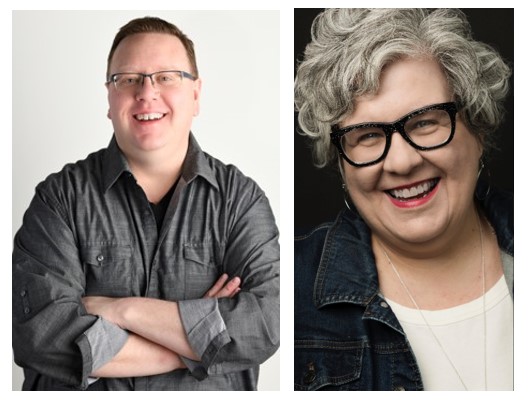
The finalists arguing for threaten are Craig R. Allen, a retail instructor from West Linn Oregon and Nicholas Thayer, a student from St. Cloud, Minnesota.

The finalists for strengthen are Tom Bailey, an alumni director from Nashville, Tennesee and Deana Cavaliere, a graduate student from Richfield, Minnesota.

Thank you to all the many essayists who took time and energy to submit their considered opinions and arguments. Now, we look forward to the June contest to find the answer to this most difficult American question.


Immigration Threatens the United States by Craig R. Allen

Throughout the years, immigrants like Albert Einstein, Bob Hope, and Joseph Pulitzer have made tremendous contributions to the culture and vitality of the United States, and millions of others have labored anonymously to build and defend this nation. Today, however, the United States is threatened by continued immigration.

A century ago, Teddy Roosevelt framed his thoughts on immigration with these words. We should insist that if the immigrant who comes here in good faith becomes an American and assimilates himself to us, he shall be treated on an exact equality with everyone else, for it is an outrage to discriminate against any such man because of creed, birthplace, or origin. But this is predicated upon the person's becoming in every facet an American, and nothing but an American. There can be no divided allegiance here. Any man who says he is an American, but something else also, isn't an American at all. We have room for but one flag, the American flag. We have room for but one language here, and that is the English language...

This is, of course, pure Roosevelt: blunt, to the point, and devoid of any attempt at political correctness. Nevertheless, it reflects the very core of this discussion. Driven largely by immigration past and present, society in the United States has adopted the habit of assigning ethnic labels to nearly everyone. We speak of "African Americans" or "Hispanic Americans." During the primaries, we have heard continual evaluation based upon how a candidate fared with specific voters, dividing us into ethnic groups apparently pitted against each other. We hear it suggested that "Latino voters" will decide the outcome, so apparently other votes don't count.

Before 1914, during the great period of European immigration, there were few in the Americas who could claim ownership of the country. In fact, the only legitimate claim belonged to Native Americans, and given history, I suspect they found immigration quite threatening, as they were continually assaulted and forced to relocate to make room for the new-comers. In the process, they lost much of their culture and nearly all of their land.

With the slowing of European immigration caused by two world wars, our society became more stable. Partly because of the unifying effect of those wars, existing Americans began to develop a true sense of self. During World War II, immigrants of German descent were, for the most part, accepted, while unfortunately, those of Japanese ancestry were not. The nature of the Pearl Harbor attack, coupled with obvious racial differences, undoubtedly fueled this discrimination. Although it is certainly true that some Japanese Americans served the country with distinction during those troubled times, many others were simply never given the opportunity.

So, what has changed? How do those changes threaten this country?

Today, much of society equates immigration with those who are here illegally. They believe that undocumented immigrants receive undeserved welfare, food stamps, free medical services, and burden the school systems. We hear that "these people" breed crime and steal jobs from "real Americans." Although many of these myths are undocumented urban fiction, there is just enough truth in them that they remain a common perception; one that serves to divide and polarize American society. We are forced to confront people openly breaking our laws.

More recently, some fear that every person of Middle Eastern descent is probably a terrorist. The events of September 11th, coupled with other attacks and the ongoing war, have generated a xenophobic mistrust that pervades our national psyche. We are weakened when we blindly fear people based solely upon national origin, and allow them into the country yet refuse them integration with our society.

Lastly, there is a feeling that recent immigrants wish to enjoy the benefits of living here, but have no desire to become Americans. Many Americans view requirements for bi-lingual education, court-appointed translators, and ballots printed in multiple languages as signs that the current crop of new-comers prefer that American society change to meet their needs, rather than adapt themselves to their new country. Watching a parade carrying Mexican flags makes you wonder why Americans are celebrating Cinco de Mayo.

Every society is weakened when it becomes fragmented, and immigration today threatens our society through the myths that foster fragmentation. Roosevelt sought immigration with assimilation. Today we cannot reach the more modest goal of allowing integration. The "huddled masses, yearning to be free" are not truly welcome, and E Pluribus Unum – From Many, One – has become a distant memory, not an attainable reality.


Immigration Strengthens The United States by Tom Bailey

I am embarrassed to admit that, as a child, I bragged about ancestors who predated the Mayflower. Now I happily admit to bragging about my niece Alice who was born in China and my niece Kate who married a very good man from Ecuador. If the measure of what it means to be an American rests on respect for the individual, the willingness to work for the achievement of your dreams, the embrace of the innate value of multiple points of view, then Kate s husband Diego is far more of a true American than those espousing fear, quotas, and fences. If vibrant engagement with life and boundless curiosity are traits we like to think of as American, there can be no better example of the American character than Alice.

Immigrants come to this country to fulfill a dream of a better life. We welcome the tired, the poor, the huddled masses not because we pity them, but because we know that hard circumstances are not the measure of a person s worth or capacity. The value of the individual is not the country of his or her birth, but the content of each persons character. To let the fear of dangers posed by the few cause us to abandon this guiding principle, to abandon the many, is to betray the essence of the American dream as a shared ideal.

Those who would erect barriers against immigration rely on the rhetoric of fear. They claim that immigrants rob natives of jobs, threaten our national security, carry disease, and endanger American culture. There can be no doubt that absorbing so many people into the nation poses challenges, but it is also true that immigrants are central to our country s wellbeing. A national policy that does not approach immigration as an investment in our future prosperity ensures that our greatness and prosperity will become a relic of the past.

The voices of fear have been very potent in recent years and it is now far more difficult for both skilled and unskilled workers to gain legal entry to the United States. At the same time the size of the native born labor force has not kept pace with either the demands for cheap labor or the needs of highly skilled cutting edge industries.

The absence of foreign-born workers makes it more not less difficult for America to compete globally. According to Bill Gates, Demand for specialized technical skills has long exceeded the supply of native-born workers...we must foster an environment that enables a new generation to dream up innovations regardless of where they were born. Even Tom Ridge said As we secure America from terrorists, we don t want to risk losing the next Enrico Fermi or Albert Einstein.

The restrictions on unskilled workers combined with the labor needs of enterprises like agriculture is a prime cause of the spike in illegal immigrants. Would it not be better to allow them to become part of the visible work force rather than driving them under ground? In making their aspirations a crime we turn them into criminals.

And what of American culture? It is true that the new arrivals to our shores will change our culture, but while this may be a threat to the status quo, it is a boon to American society. With each new interaction between people from different backgrounds the society and its citizens are enriched. Changed yes, but changed for the better.

I work in a school where about 15% of the student body comes from international families (representing 35 countries). This school is by any measure test scores, colleges accepting its graduates, awards among the very best in the country. I doubt there is a single teacher, student, or parent who would argue that the diversity of the student body is anything less than a benefit to the school; rather it is a vital ingredient in the school s success.

It is hard to imagine that we will continue the march towards a more perfect union if we embrace exclusion. Is it smart to let the dangers posed by the few to cause us to withdraw our welcome of the many? Can the inclusion of people with the courage to put their old lives behind them in order to strive for a better life on unknown shores help but strengthen the nation? If we deny the poor striving to be free we are the ones who will be impoverished.


Immigration Threatens the United States by Nicholas Thayer

If one were to argue that immigration is harmful to the United States one could easily cite examples of how illegal immigration is harmful, but the same arguments would not apply to the thousands of legal immigrants that arrive at America's shores every year. But there is an overwhelming argument against legal and illegal immigration alike: immigration threatens the very core of the United States, our own identity as a nation.

Political writer Michael Walzer in Thick and Thin: Moral Argument at Home and Abroad proposes that citizenship has two distinct aspects to it. First, there are "thin" components to citizenship. These components to citizenship are largely technical, things such as birth place or citizenship tests, green cards, and other legalities. Second, there is a much deeper aspect to citizenship, the "thick" component. Language, history, culture, a shared common vision, etc., these are "thick" aspects of citizenship. They are also unique to each country, just as the "thin" legalities are.

Consider a recent immigrant using the "thick" and "thin" idea. Take, for example, a Mexican immigrant (legal or illegal). This person has come to the United States often under the worst of conditions, to work in the worst of conditions, because this person knows he or she could make a small fortune compared to what he or she would make in Mexico. There is no ill will here, simply the preservation of this person's own livelihood and the livelihood of his or her family. But let's face it, the brown-skinned first generation immigrant from Mexico is no more a "citizen" of the United States with a piece of paper giving him or her legal status than he or she is without that legal status, especially if that person does not speak English. He or she has not participated in the shared history and culture of the American people. It would be very difficult for this Mexican immigrant to ever be truly considered an American citizen, or even more difficult, feel like an American citizen. So it is obviously not the "thin" aspect of citizenship like a legal status that makes one a real American.

So what does make one an American? America is and has been a nation of immigrants. We cannot deny this. Each wave of immigrants has brought new traditions and cultures. Unfortunately, each wave brings more and more dilution of any understanding we could ever attempt to have of what an American truly is. What is one moment uniquely and distinctly American, what has been built over our brief history, suddenly becomes something to be amended and tailored to those new immigrants so they can be included.

American culture has not had a long time to develop. It does not have a long history that binds us together like older countries and societies do. But it is time to start. There must come a point when being an American is not only a legal status, but a cultural status, and this cannot happen when virtually anyone and everyone is free to immigrate to the United States. It is important for the solidarity and continued prosperity of the country that Americans at some point stop looking back to their immigrant roots and begin to recognize our American roots. We need to understand that some of us are no longer immigrants. We have already been melted into the great American melting pot; we are now one thing, one people: Americans!

During its infancy, the United States was dependant on immigrants to build it. The problem is that the United States has been built, and has been filled to the brim with people willing to contribute. If immigration is allowed to continue, and our society continues to be "thinly" defined, we will find ourselves in a position where we have no idea who we are and where we are headed.

Yes, immigration threatens our identity as a nation. It inhibits our growth as a single people and dilutes our blossoming culture. Without a distinct American identity we will be doomed to an existence with no common bond but capitalism and the pursuit of wealth. Although this sounds like a very "American" proposition, I believe America is much more than that. As to what that is, we need to continue to discover it, but we will never be able to find out if our culture continues to be eroded through immigration, whether legal and illegal.


pro immigration by j. deana cavaliere

Up until recently, a drive through any of the multi-cultural neighborhoods in my area would often leave me disgruntled with thoughts running through my head. Why can't they call the mercado what it is, a strip mall? Why can't they speak English? Why can't they just assimilate into the American culture?!? Perhaps I have been persuaded into having these opinions; presidential candidates, mainstream media, even my own husband, a proud union member, have all influenced my thoughts on immigration. But is this what I truly believe?

A rather innocuous event helped shed light on this subject. While flipping through the glossy pages of a well-funded travel magazine, I saw all the wondrous, exotic places I could visit: private beaches, sequestered resorts, brand-name hotels…For the right price, I can rent my own little piece of America anywhere in the world. Just how much interaction with other cultures does this type of behavior afford? I recall a family vacation, standing in front of a café in Rome with my mother-in-law. She was reluctant to go in because it was a "local" restaurant. She was afraid of ordering something she wouldn't like, yet was too stubborn to take out her Italian phrase book and try to communicate.

It occurred to me while browsing through the travel magazine that when Americans go abroad, they blanket themselves in their own culture, whether for protection or as a badge of honor. In strange places, we attach ourselves to the familiar. Michel de Montaigne made similar observations on a trip across Europe on horseback in 1580. He commented in his Essays on the behavior of his fellow traveling companions:

Once out of their villages, they feel like fish out of water. Wherever they go they cling to their ways and curse foreign ones. If they come across a fellow-countryman…they celebrate the event…With a morose and taciturn prudence they travel about wrapped up in their cloaks and protecting themselves from the contagion of an unknown clime.

I have concluded that what the Hispanics, Hmong, and Somalis in my area are doing is not rejecting American society. They are only doing what is natural…surrounding themselves with the familiar. How could I, as an individual, judge these local immigrants for what appears to be basic human nature? Perhaps my sense of nationalism has clouded my judgment…

Looking to the European Union, I find inspiration. Theirs is an innovative form of government not based on physical borders, but on political philosophies. Any country in the world can apply to join the EU. Once a member, that country's citizens are free to move within and around the EU as we do from state to state in the US. In a slow but steady process, Europeans are shedding their national identities in favor of "European-ness." They can see their place in a global context.

America seems to be lagging far behind in this process of globalization, with the immigration issue a glaring example. Building walls and fences, adding more bureaucracy, increasing security…to what end will these actions achieve? Build a wall to keep people out, and soon its function will be to keep people in. A different mindset is in order. We must strive as a culture to find our place in the world. A simple first step would be viewing other nation's peoples as our PEERS.

Inscribed on Montaigne's library ceiling was the quote, "I am a man, nothing human is foreign to me." In that spirit, I have engaged the idea of immigration in its purest sense. The diffusion of cultures is a founding principal of our country and fuels the efforts of globalization. So now I stop and do some shopping at the mercados. Tasting exotic foods and meeting foreign people happens not too far from my own back yard. The exchange of cultural information is what will keep this country strong and vibrant. It starts on a personal level.


Great American Think-Off History

2007: Which Should you Trust More-Your Head or Your Heart?

2006: Which is more valuable to society: Safety or Freedom?

2005: Competition or Cooperation: Which benefits society more?

2004: Should Same Sex Marriages be Prohibited?

2003: Do We Reap What We Sow?

2002: Is the Pen Mightier than the Sword?

MORE >>>


Listen to MPR Midday's show on the New York Mills Regional Cultural Center and the 2004 Great American Think-Off.

HOUR 1: (Thurs, June 10, 2004 11 a.m.)
The arts in small town Minnesota

HOUR 2: (12 p.m.)
The Great American Think-Off

MORE THINK-OFF AUDIO ARCHIVES >>>

LISTENING TO THESE ARCHIVES REQUIRES RealPlayer. Click here to download.

Click here to view the story on mpr.org

Online Entry Form   Contestants   Media   History   The Center   Sponsors   Links   Contact   Home

 © New York Mills Regional Cultural Center - New York Mills, Minnesota - Kulcher.org

Website design by iCRE8